

REQUIREMENTS ENGINEERING
Requirements Engineering is a discipline within Software Engineering, focused on the accurate identification, documentation, and management of requirements related to software products and applications.
It is a crucial process in the software lifecycle, ensuring that the final product meets the expectations and needs of end-users and stakeholders.
IREB, the International Requirements Engineering Board, is a non-profit organization established in 2006 with the vision of giving the discipline of Requirements Engineering (RE) the importance and direction that correspond to its added value for the industry.
IREB has developed the CPRE (Certified Professional for Requirements Engineering) certification system, which has become a globally recognized reference as the knowledge base for individual certification of RE professionals.
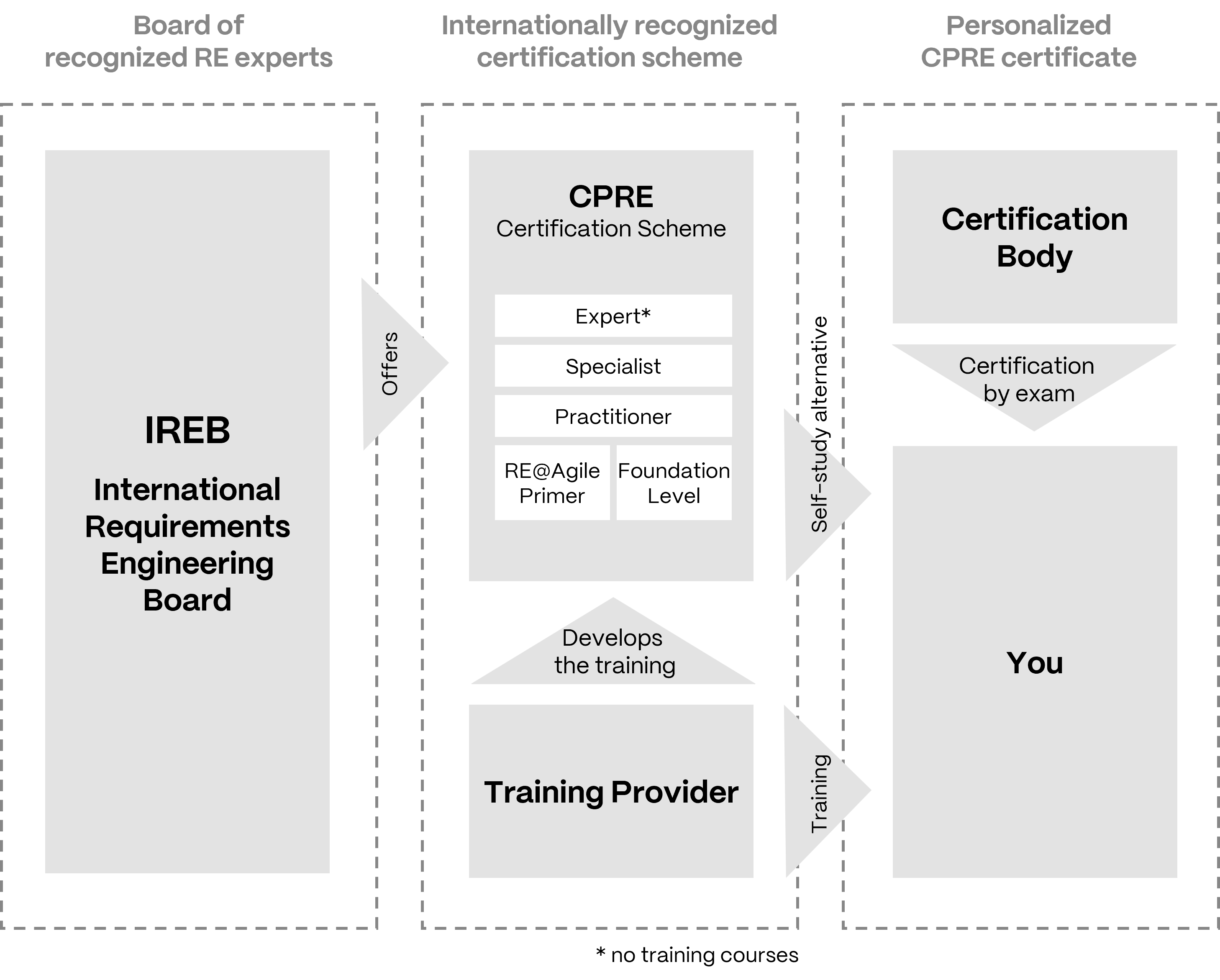
The IREB board is composed of leading figures in the field of Requirements Engineering (RE), coming from academia, research, industry, and consultancy.
Since 2017, IREB® has incorporated REQB®, creating a single internationally recognized certification scheme for Requirements Engineering.
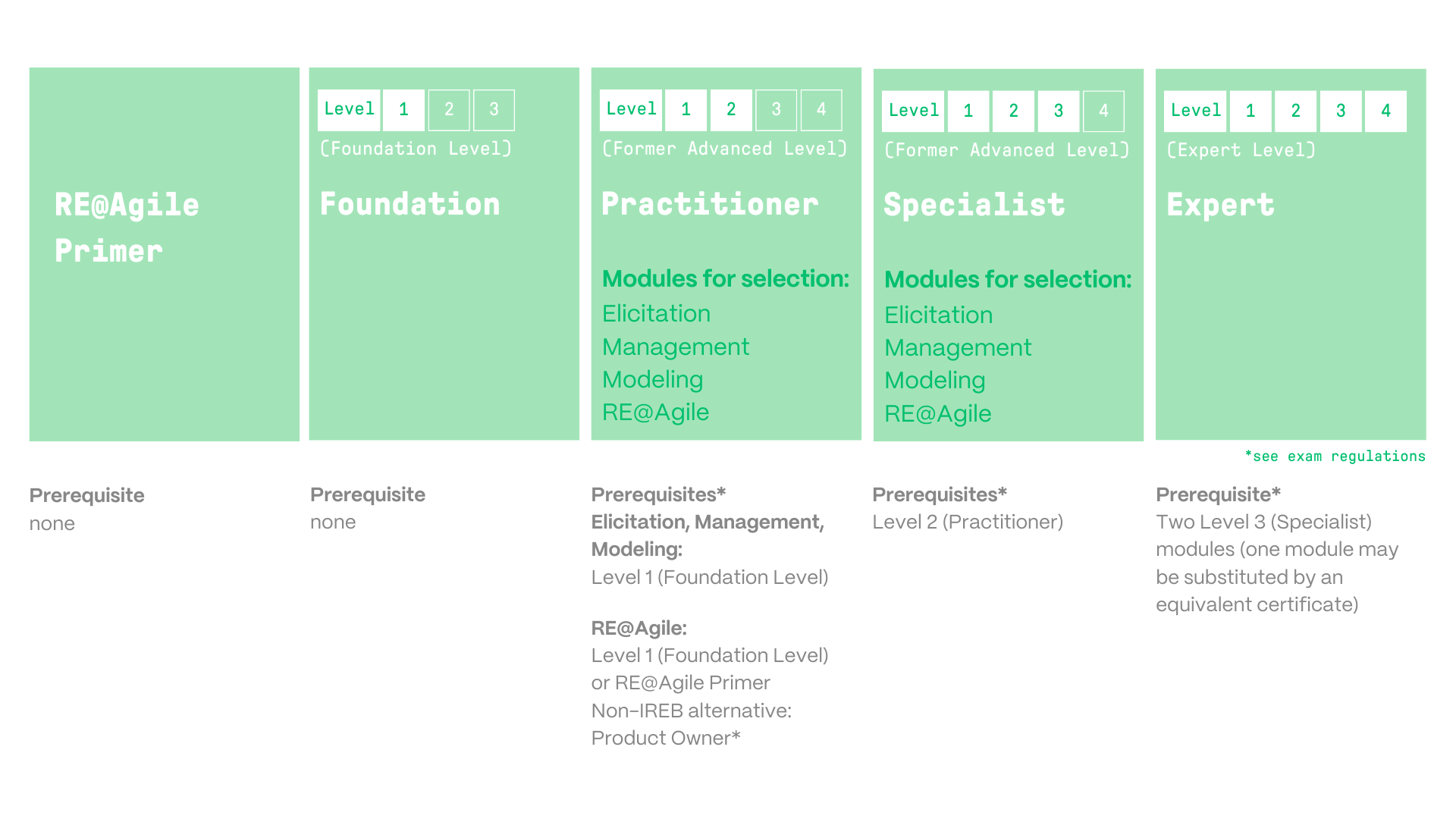
The Foundation is the first level of the certification path, necessary to progress to the subsequent levels. The exams consist of a multiple-choice questionnaire.
At a more advanced level, for those who have already achieved solid competence and experience in RE, the exams for the Practitioner certifications consist of a multiple-choice questionnaire (with the Foundation certification as a prerequisite). The exams for obtaining the Specialist certification allow candidates to take an additional step in their certification path and consist of a written assignment in which the candidate can demonstrate a higher level of advanced experience compared to the Practitioner level. Therefore, the corresponding Practitioner certification is a prerequisite.
The Expert level, finally, requires a more complex set of prerequisites, as well as demonstrable direct experience, and is obtained by passing a written exam, completing a written thesis, and an oral examination.
In Italy, ITA-STQB offers Foundation level certifications and Practitioner level certifications.
CERTIFICATIONSOFFERED IN ITALY

CPRE FOUNDATION LEVEL
The starting point for your certification journey

CPRE REQUIREMENTS MANAGEMENT PRACTITIONER
IREB certifications for requirements management professionals

CPRE REQUIREMENTS ELICITATION PRACTITIONER
IREB certifications for requirements elicitation professionals

CPRE RE@AGILE PRACTITIONER
For the Requirements Engineering in Agile contexts
CPRE
FOUNDATIONFOUNDATION
LEVEL
The Foundation level certification is aimed at professionals working in the field of Requirements Engineering with basic experience and requires fundamental knowledge of this subject. It is primarily intended for those working in Requirements Engineering, Business Analysis, software and system development, who wish to apply their skills with quality. The Foundation level covers the basics of requirements elicitation with appropriate documentation, verification and validation of requirements, as well as their management throughout the entire lifecycle of the final product.
There are no prerequisites for accessing the Foundation level. A person with a CPRE Foundation certificate:
is familiar with the terminology of Requirements Engineering, Business Analysis, and Requirements Management,
understands the basic techniques and methods of Requirements Engineering and their application,
is familiar with the most commonly used notations for requirements.
The content schema of the CPRE Foundation Level certification is as follows:
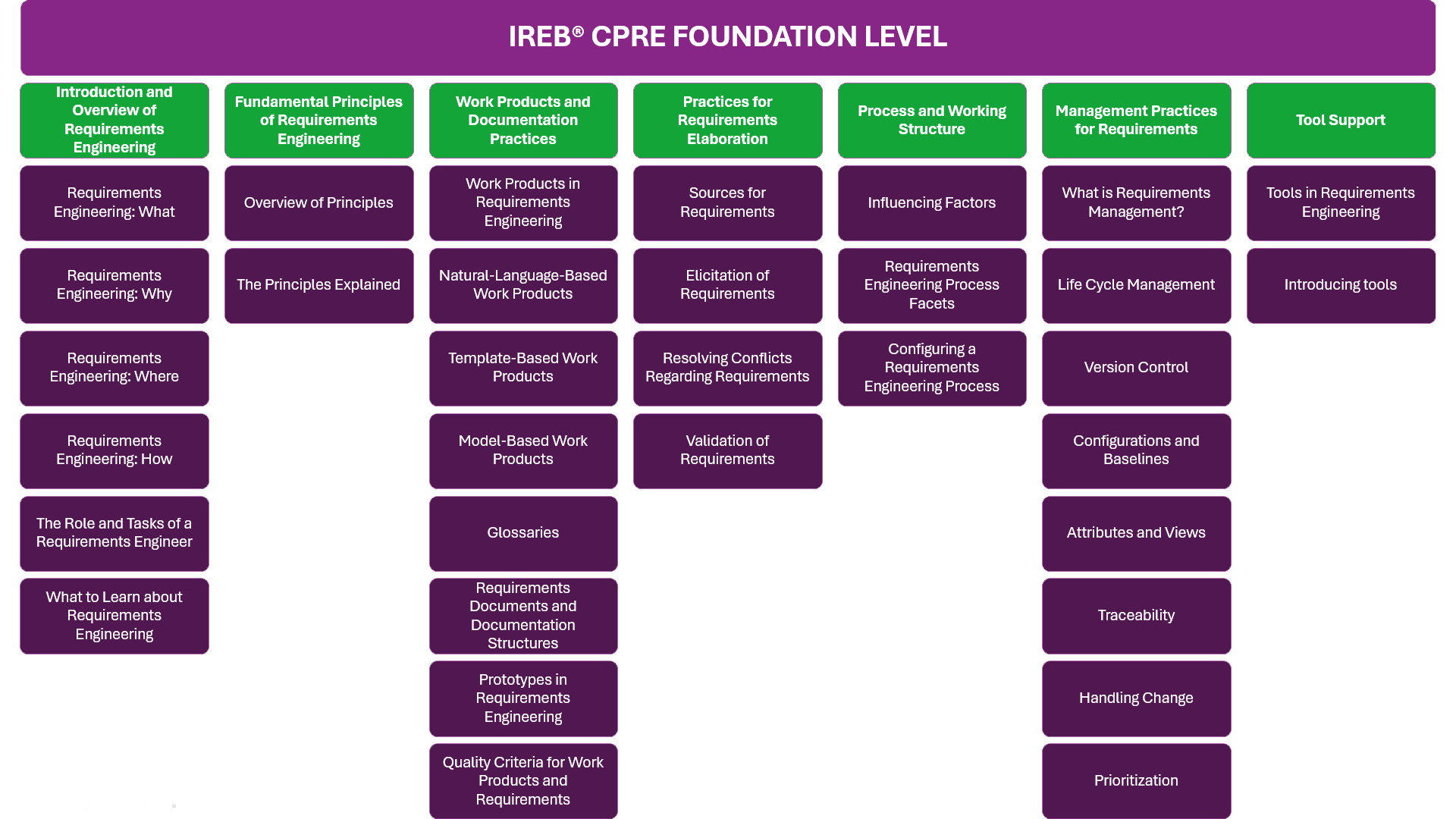
CPRE
REQUIREMENTSREQUIREMENTS
MANAGEMENTMANAGEMENT
PRACTITIONER
The CPRE Requirements Management module is designed for those involved in Requirements Engineering, Business Analysis, Business Engineering, Software Engineering, Product Management, Release Management, and other areas where in-depth knowledge of requirements management is desired.
This module covers the educational units and learning objectives for the certification exams in:
Requirements Management - Practitioner
Requirements Management - Specialist
The exam for obtaining the Requirements Management – Practitioner certification consists of a multiple-choice questionnaire and requires the Foundation Level certification as a prerequisite.
The exam for obtaining the Requirements Management - Specialist certification consists of a written assignment and requires the Requirements Management – Practitioner certification as a prerequisite.
In Italy, ITA-STQB only offers the Requirements Management – Practitioner certification exam.
The CPRE Requirements Management module encompasses the skills needed to tackle challenges during active requirements management and in practical situations. It covers methods and techniques for planning, executing, and reviewing the Requirements Engineering and Requirements Management process.
Focus:
Structuring requirements through an information model to ensure targeted traceability.
Identifying attributes for requirements to implement optimal reporting and, based on this, dedicated user views.
Defining evaluation criteria for requirements and understanding the basis for prioritizing them.
Being able to structure and reuse requirements for product families through targeted variant management.
Implementing version and change management in Requirements Engineering.
Establishing a targeted Requirements Engineering process and setting up a reporting system for Requirements Engineering.
The content schema of the CPRE Requirements Management certification is as follows:
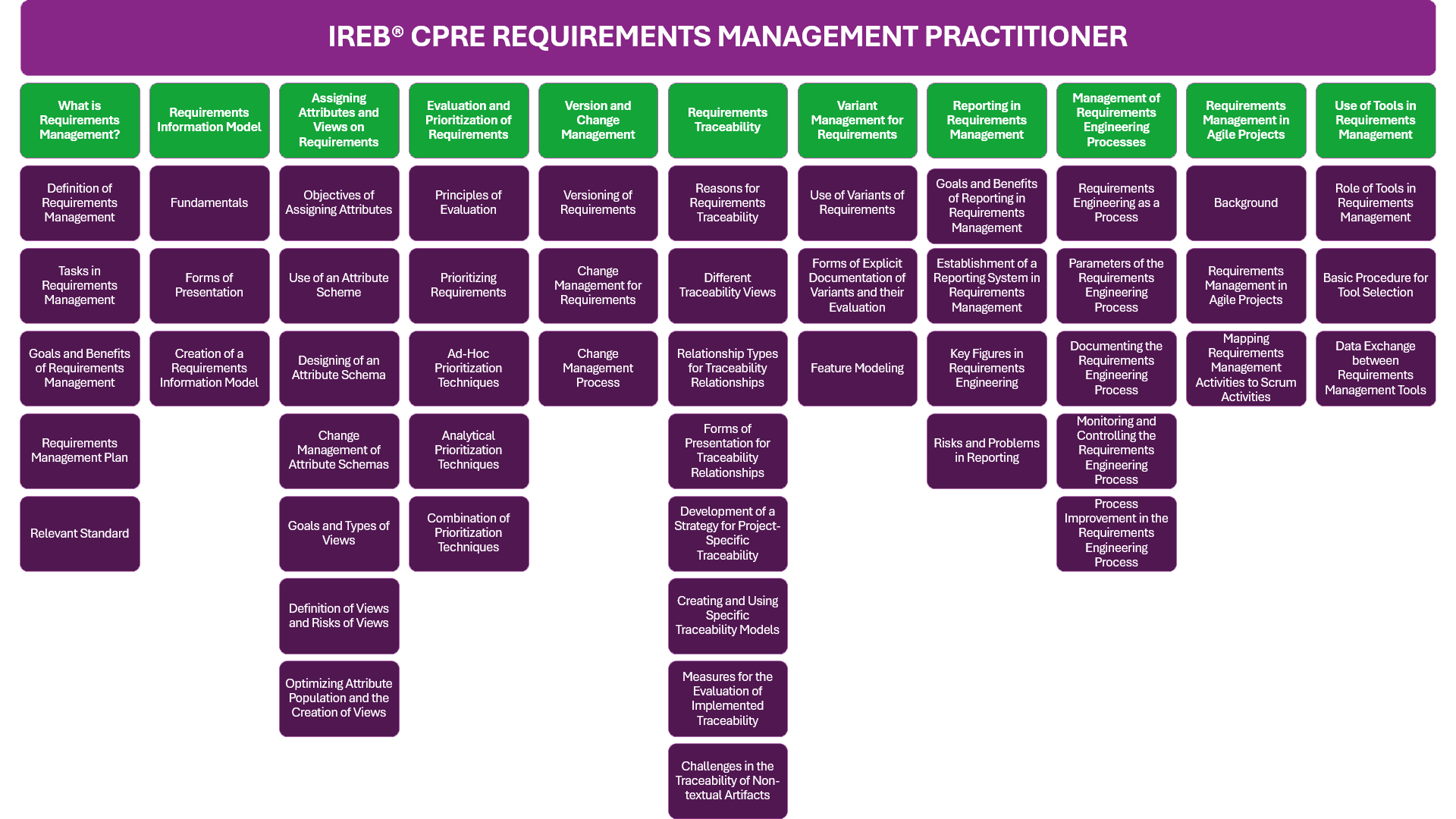
CPRE
REQUIREMENTSREQUIREMENTS
ELICITATIONELICITATION
PRACTITIONER
The CPRE Requirements Elicitation module is aimed at professionals involved in Requirements Engineering, Business Analysis, Business Engineering, Software Engineering, Product Management, Release Management, and other areas where in-depth knowledge of requirements elicitation is desired.
This module covers the educational units and learning objectives for the certification exams in
Requirements Elicitation - Practitioner
Requirements Elicitation - Specialist
The exam for obtaining the Requirements Elicitation – Practitioner certification consists of a multiple-choice questionnaire and requires the Foundation Level certification as a prerequisite.
The exam for obtaining the Requirements Elicitation - Specialist certification consists of a written assignment and requires the Requirements Elicitation – Practitioner certification as a prerequisite.
In Italy, ITA-STQB only offers the Requirements Elicitation – Practitioner certification exam
The CPRE Requirements Elicitation module encompasses the skills necessary to identify and discover relevant requirements, understand the wishes and needs of stakeholders, and reach consensus among stakeholders on those requirements.
The acquired skills should enable you to transform requests, desires, and implicit expectations into explicit requirements and manage any conflicts that arise.
The content schema of the CPRE Requirements Elicitation certification is as follows:
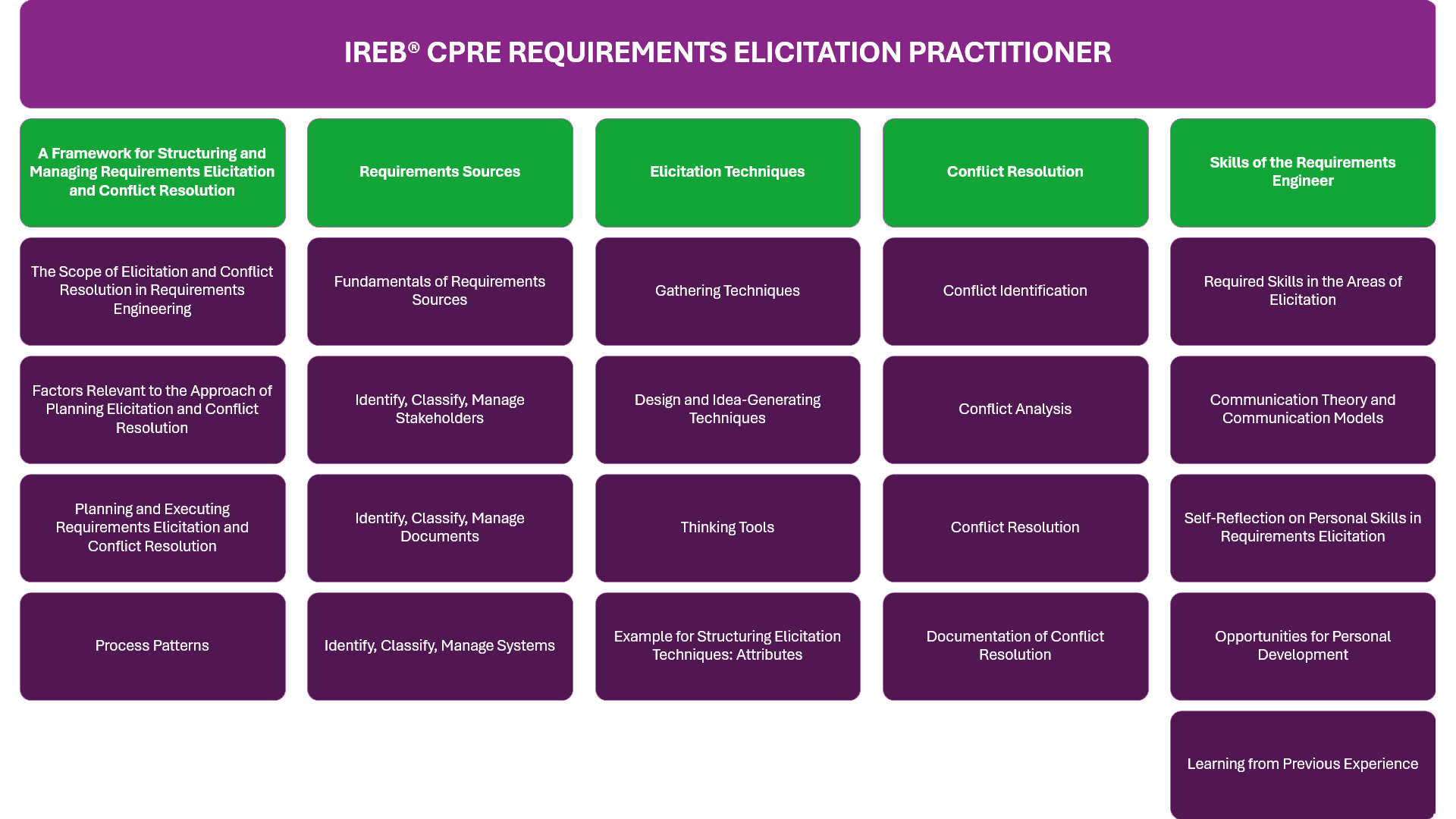
CPRE
RE@AGILERE@AGILE
PRACTITIONER
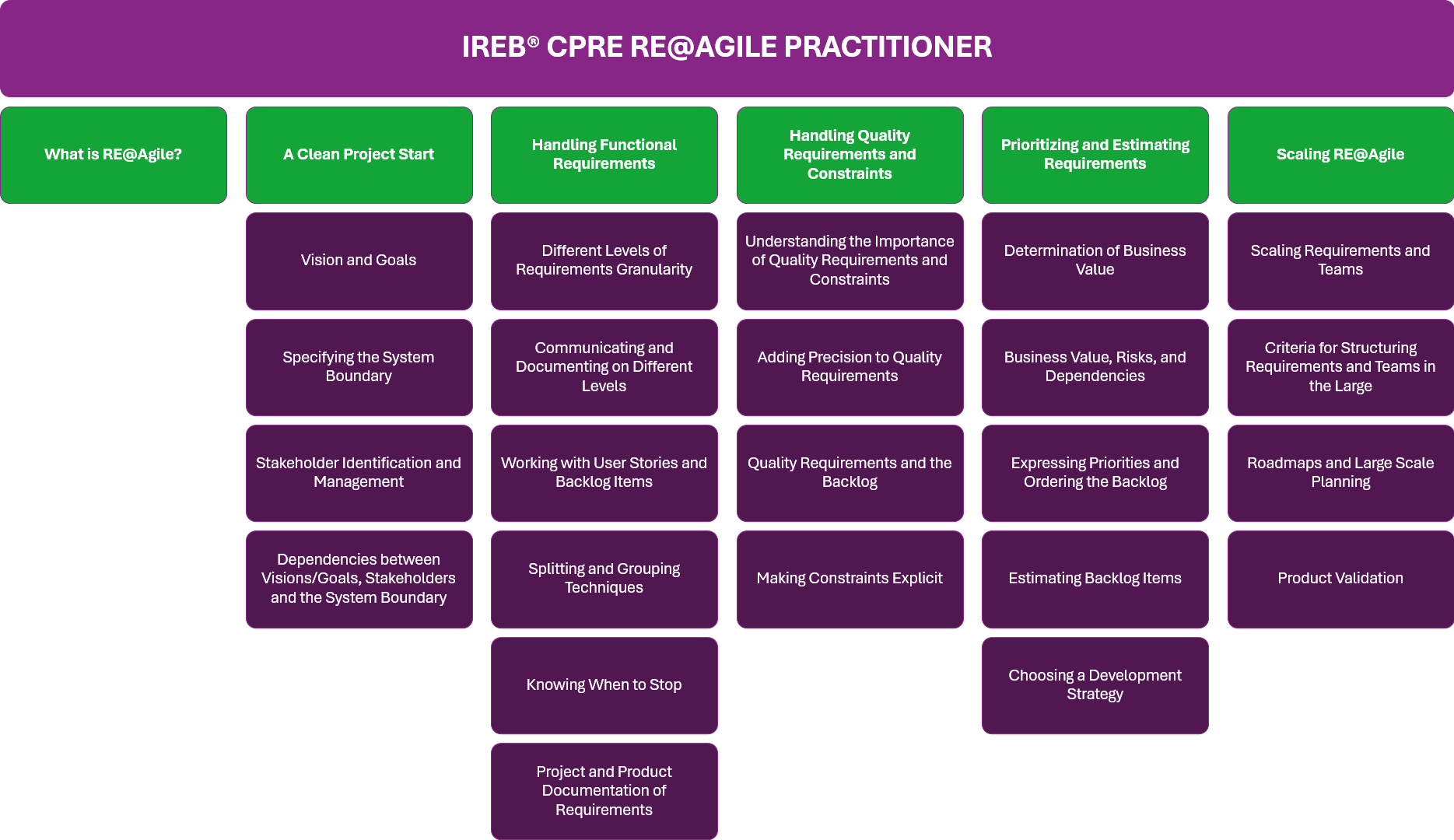
The CPRE RE@Agile module combines the principles of Requirements Engineering with those of agile methods. In agile environments, requirements change frequently and quickly, which requires a flexible yet structured approach. This module shows how you can use RE methods effectively in agile environments to ensure clear and feasible requirements despite high dynamics. It teaches you techniques for integrating Requirements Engineering and agile approaches in order to realize your projects efficiently and flexibly.
This module covers the educational units and learning objectives for the certification exams in
- RE@Agile - Practitioner
- RE@Agile - Specialist
The exam for obtaining the RE@Agile – Practitioner certification consists of a multiple-choice questionnaire and requires the Foundation Level certification as a prerequisite.
The exam for obtaining the RE@Agile - Specialist certification consists of a written assignment and requires the RE@Agile – Practitioner certification as a prerequisite.
In Italy, ITA-STQB only offers the RE@Agile – Practitioner certification exam
The content schema of the CPRE RE@Agile certification is as follows: